Introduction: Why This Matters Now
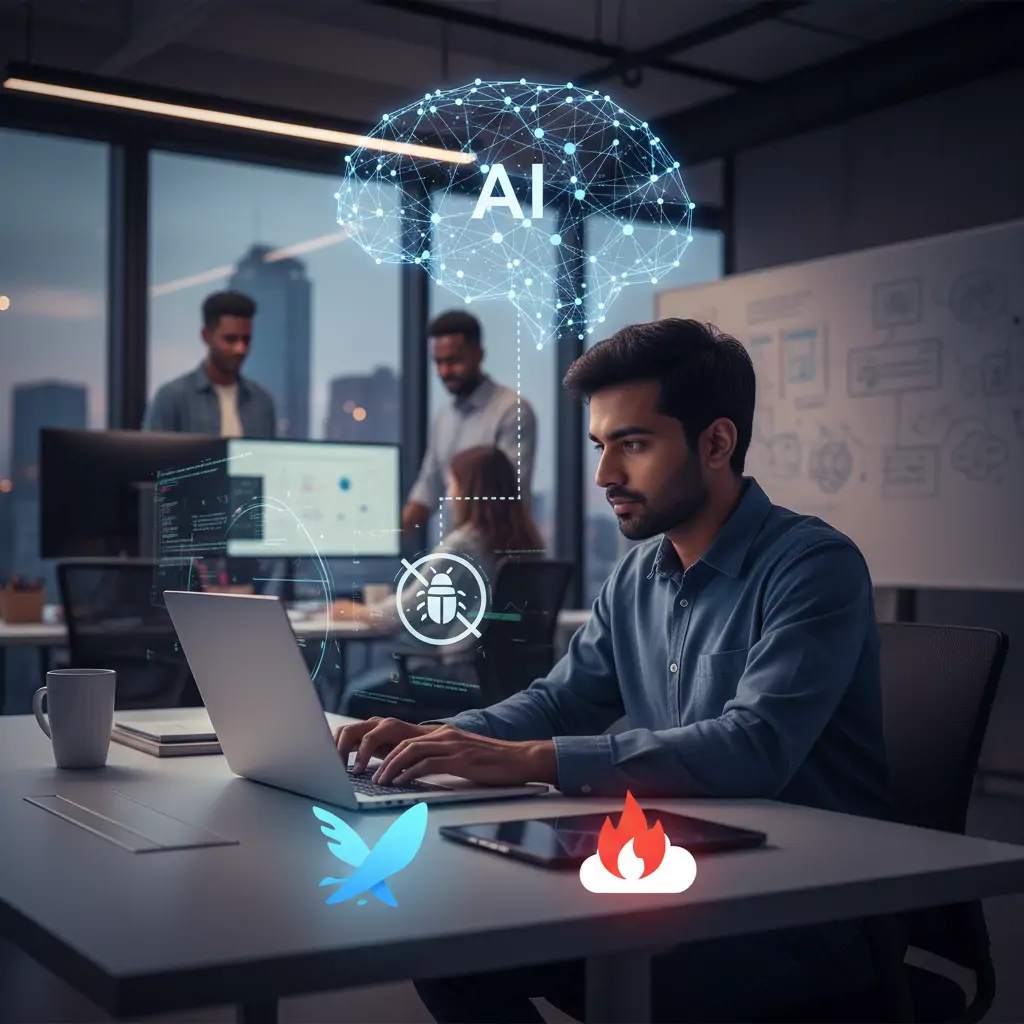
In early 2025, a report from Forrester revealed that AI-driven mobile frameworks are slashing development time by up to 40%. This seismic shift is transforming how apps are built and deployed, creating ripple effects across industries. For developers, it's a game-changer, while businesses are eyeing new competitive advantages, and investors are recalibrating their strategies. Read time: 9 minutes
Market Dynamics: The Current State
The landscape of mobile development is rapidly evolving. In 2024, Google’s Flutter integrated AI capabilities to automate repetitive coding tasks, launching a wave of similar enhancements by competitors. Microsoft’s Xamarin, in October 2024, incorporated AI-driven testing tools that reduce debugging time by 30%. According to Statista, the global mobile app development market reached $200 billion in 2024, with AI-tech contributing to 25% of new solutions.
Key Drivers: What's Fueling This Trend
Driver 1: Technical Advancements
Advancements in machine learning algorithms enable predictive coding and automated testing, streamlining development processes. NVIDIA’s GPUs, optimized for AI workloads, accelerated data processing speeds by 50% in 2024, as reported by TechCrunch.
Driver 2: Economic Pressure
Businesses facing economic uncertainty are pressured to reduce costs and speed time-to-market. AI frameworks cut costs by automating up to 70% of the development process, according to a 2025 McKinsey study.
Caption: Data visualization
Real-World Impact & Case Studies
Case Study 1: Airbnb
In March 2025, Airbnb launched a complete overhaul of their mobile platform using AI-driven frameworks, achieving a 40% reduction in development cycle time. They implemented AI-enhanced user interface testing, which cut their release cycles by 30%. Key lesson: Integrating AI not only accelerates development but enhances product quality.
Case Study 2: Spotify
Spotify leveraged AI frameworks to streamline app updates, reducing update cycles from two weeks to five days, as reported in January 2025. This agility helped Spotify rapidly deploy new features, maintaining their competitive edge.
Industry Implications
For Developers
- Learn AI-related tools and frameworks like TensorFlow, PyTorch.
- Opportunities in companies prioritizing AI integration in app development.
For Businesses
- Strategically incorporate AI to reduce costs and improve development efficiency.
- Gain competitive advantages by being early adopters.
For Investors
- Explore investment in companies using AI to innovate development processes.
- Consider potential risks of over-reliance on AI technology.
Challenges & Criticisms
Despite the benefits, concerns arise about over-automation, which might lead to skill atrophy among developers. Skeptics argue that while development time decreases, the reliance on AI introduces vulnerabilities, such as code errors due to biased algorithms, as highlighted by the 2024 IEEE conference.
Caption: Technology comparison
Future Outlook: What's Next
In the short term, expect to see AI frameworks become standard in mobile development kits, with widespread adoption by mid-2025. Long-term, as these technologies mature, they will likely redefine developer roles and industry standards. By 2027, AI-powered development could become the norm, potentially halving current development times.
Frequently Asked Questions
- What are AI-driven mobile frameworks? They are platforms that use AI to automate parts of the app development process.
- Why are they reducing development time? AI automates repetitive tasks and optimizes code, speeding up the process.
- Are there risks involved? Yes, reliance on AI can introduce bias and reduce developer oversight.
- How can businesses prepare for this shift? By investing in AI training and infrastructure.
Conclusion: Key Takeaways
- AI-driven frameworks are reducing app development time by up to 40%.
- 2025 is a pivotal year as more companies adopt AI in development.
- Opportunities and challenges exist for developers, businesses, and investors.
- To stay competitive, stakeholders must adapt to these changes.
For further learning, explore resources on AI integration in mobile development.