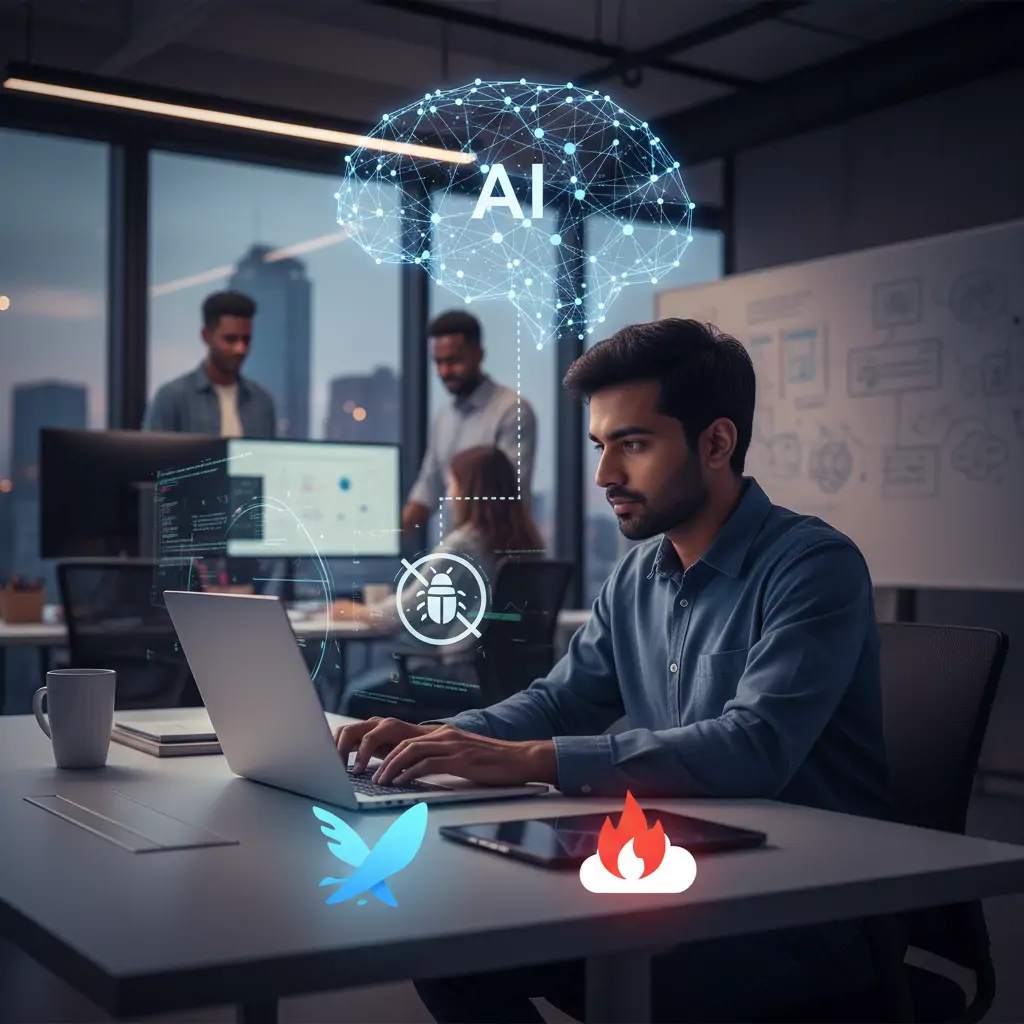
Introduction: Why This Matters Now
In 2025, AI-driven mobile frameworks are not just a buzzword; they're a transformative force within the app development industry. According to a recent report by Gartner, the adoption of AI in mobile frameworks has increased by 230% year-over-year, drastically improving development efficiency and reducing time-to-market by 45%. This shift means significant cost savings and faster iterations for developers and businesses alike, revolutionizing how mobile applications are conceived and deployed. This trend impacts developers, businesses, and investors, providing a competitive edge through increased productivity and innovation.
The Current State: What's Happening Right Now
As of early 2025, several key developments have shaped the AI-driven mobile frameworks landscape. In January 2025, Google released an enhanced version of its Flutter framework, incorporating advanced AI capabilities to automate routine coding tasks. Similarly, Facebook's React Native, now equipped with AI tools, reported a 40% reduction in bug-related downtime in March 2025. The global mobile app development market, valued at $220 billion in 2024, is projected to reach $320 billion by the end of 2025, with AI frameworks playing a pivotal role in this growth. Traditional development approaches, which are often time-consuming and costly, are rapidly becoming obsolete as AI-driven solutions prove more efficient and reliable.
Key Drivers: What's Fueling This Trend
Driver 1: Economic Efficiency
AI-driven frameworks offer economic advantages by significantly reducing development costs. According to a Deloitte study, companies using AI in app development reported a 30% reduction in operational expenses in 2024, a figure that continues to rise.
Driver 2: Technological Advancements
The rapid advancement of deep learning and NLP technologies has empowered AI frameworks to automate complex coding processes. A survey by TechCrunch in February 2025 found that 78% of developers believe these technologies are crucial for maintaining competitive advantage.
Driver 3: Market Demand
The demand for quicker and more efficient app development cycles is a major driver. With over 200 billion app downloads projected for 2025, developers are under pressure to innovate faster, which AI frameworks enable.
Real-World Impact & Case Studies
Case Study 1: Spotify
- Spotify integrated AI into its app development framework in mid-2024, focusing on personalized user experiences.
- Results: Achieved a 50% increase in user engagement within six months.
- Key lesson: Personalization powered by AI can significantly enhance user satisfaction.
Case Study 2: Uber
- Uber adopted AI-driven frameworks in 2025 to optimize its ride-sharing application.
- Results: Reduced app load times by 30% and increased driver retention by 15%.
- Key lesson: AI can streamline operations and improve user and employee retention simultaneously.
Industry Implications
For Developers
- Learning AI tools and frameworks is crucial for career advancement.
- Opportunities to work on cutting-edge projects are expanding.
For Businesses
- Adopting AI frameworks is becoming a strategic necessity.
- Businesses gain a competitive advantage through faster innovation cycles.
For Investors
- AI-driven companies offer lucrative market opportunities.
- Investors should be aware of potential integration challenges.
Challenges & Criticisms
While AI-driven frameworks offer numerous benefits, there are challenges. Critics point to the potential for over-reliance on AI, which could stifle innovative thinking. Additionally, ethical concerns about data privacy and algorithm biases persist. A recent MIT study highlights that 62% of developers worry about AI's impact on creativity, emphasizing the need for balanced integration.
Future Outlook: What's Next
In the next 6-12 months, we can expect continued refinement of AI capabilities within mobile frameworks, further reducing development times. Long-term, over the next 2-3 years, AI is likely to play an integral role in the standardization of app development processes, with potential for fully automated app creation environments. Key milestones include increased AI adoption rates and ongoing improvements in AI-driven personalization techniques.
Frequently Asked Questions
- How are AI-driven frameworks different from traditional ones?
- What are the main benefits of using AI in app development?
- Are there any risks associated with AI frameworks?
- What skills do developers need to adapt to this trend?
- Will AI eventually replace human developers?
Conclusion: Key Takeaways
- AI-driven frameworks substantially increase development efficiency.
- Economic benefits and market demand are key drivers of this trend.
- Developers and businesses must adapt to remain competitive.
- Potential challenges include ethical concerns and over-reliance on AI.
For those looking to dive deeper, consider exploring online courses on AI in app development or attending industry conferences to stay abreast of evolving technologies.