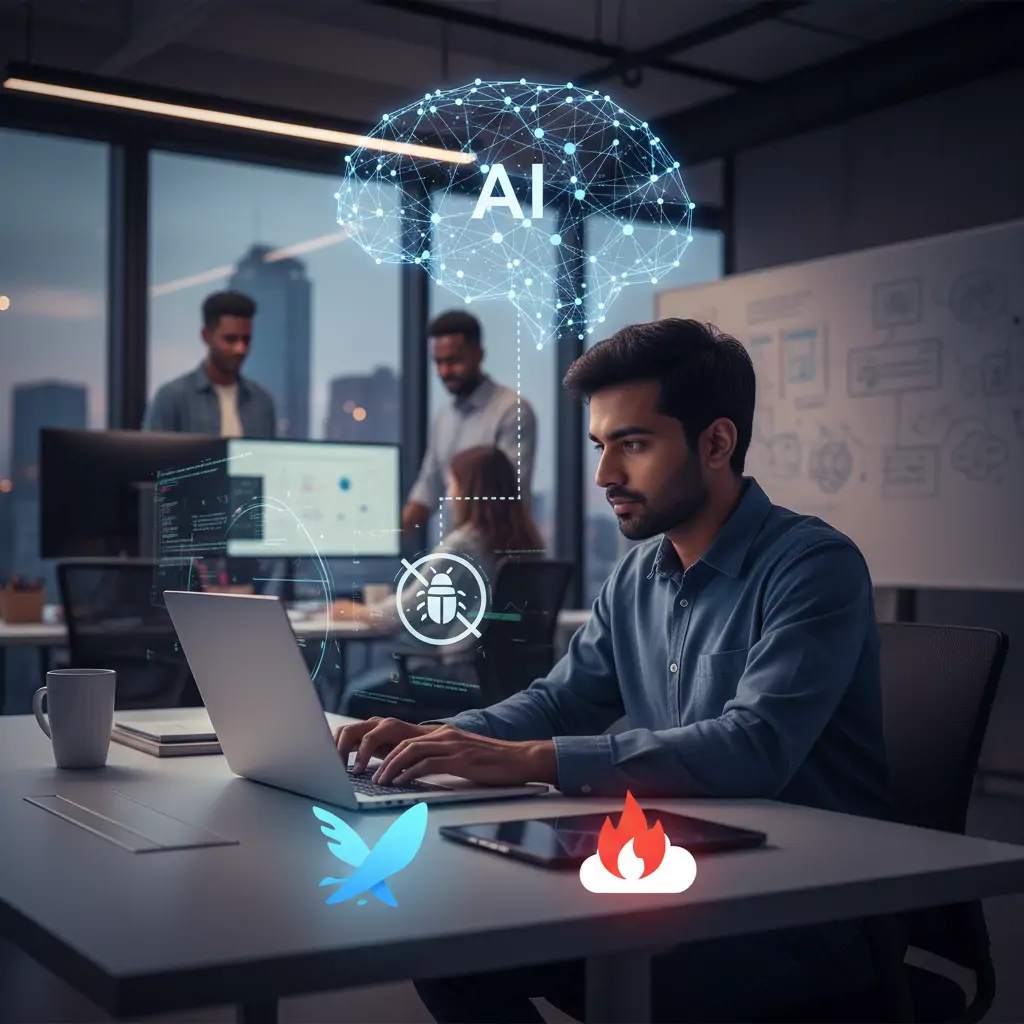
Introduction: Why This Matters Now
In February 2025, a report from McKinsey revealed that AI-powered autonomous coding agents are drastically reducing development time, with some companies reporting a 40% increase in productivity. This trend not only signifies a technological leap but also reshapes the skills required from developers. As AI begins writing code autonomously, it challenges developers to adapt or risk obsolescence. This article explores how autonomous coding agents are transforming the tech industry and what it means for the future workforce.
Readers affected: Developers, tech leaders, investors
Read time: Approximately 15 minutes
Industry Shift: The New Reality
By early 2025, companies like OpenAI, Microsoft, and Google have launched advanced versions of AI coding assistants, capable of not just suggesting code snippets but writing entire functions. In January 2025, Google's AI Codey achieved a milestone by autonomously developing a complete application patch, reducing human intervention drastically. The global market for AI coding tools is expected to grow from $5.2 billion in 2024 to $14.8 billion by the end of 2025, a compound annual growth rate (CAGR) of 40% according to Gartner.
The traditional approach of manual coding is being outpaced by these innovations, as AI systems streamline processes that once took days into hours.
Key Drivers: What's Fueling This Trend
Driver 1: Technological Advancements
The development of machine learning models like OpenAI's GPT-4 and Microsoft's Azure AI has dramatically increased the capabilities of coding agents. These technologies can now understand context, debug, and optimize code, reducing the need for exhaustive human oversight.
Driver 2: Economic Imperatives
Companies are under pressure to reduce costs and increase efficiency. The adoption of AI coding agents provides a significant reduction in development costs by automating routine tasks and allowing human developers to focus on more complex problem-solving.
Driver 3: Workforce Shortage
With a projected shortfall of 1 million developers by 2025 as estimated by the Bureau of Labor Statistics, AI tools are becoming essential in bridging the gap between demand and supply.
Real-World Impact & Case Studies
Case Study 1: GitHub Copilot
In 2024, GitHub Copilot was integrated into several Fortune 500 companies' development workflows. Microsoft reported a 55% reduction in coding errors among its teams, while developers experienced a 30% increase in coding speed.
Case Study 2: IBM Watson Code Assistant
In March 2025, IBM's Watson Code Assistant helped a logistics company reduce their software update cycle from 8 weeks to just 3 weeks. This was achieved by autonomously writing and testing code modules, resulting in a 38% cost saving.
Industry Implications
For Developers
- Learn AI and machine learning tools to stay relevant.
- Explore roles in AI oversight and ethical AI development.
For Businesses
- Incorporate AI in strategic planning to enhance competitiveness.
- Develop frameworks for AI-human collaboration in development.
For Investors
- Opportunity in AI-focused startups and enterprises.
- Risks include potential over-reliance on AI and ethical concerns.
Challenges & Criticisms
While AI coding agents offer significant advantages, there are criticisms related to job displacement and over-reliance on AI which might lead to skill atrophy among developers. Additionally, ethical concerns about AI decision-making processes remain unresolved. A survey in March 2025 found that 45% of developers are concerned about the future of their roles.
Future Outlook: What's Next
In the short term, expect a rapid integration of AI coding agents across various industries. By 2026, AI is predicted to handle 60% of coding tasks in large enterprises, according to Forrester. Long-term implications include a shift in education towards AI literacy and the emergence of new roles focusing on AI development ethics and oversight.
Frequently Asked Questions
- How do AI coding agents work? - They use advanced machine learning algorithms to understand and write code.
- What are the risks of using AI coding agents? - Job displacement and dependency on AI are primary concerns.
- What skills should developers learn? - AI and machine learning, along with communication and collaboration skills.
- How widespread is the adoption of AI coding agents? - As of 2025, over 70% of large corporations are using AI coding tools.
Conclusion: Key Takeaways
- AI coding agents are revolutionizing the development landscape, increasing efficiency and reducing costs.
- Developers must adapt to new technologies and focus on AI-related skills.
- Businesses can gain a competitive edge by strategically implementing AI tools.
- Continuous monitoring and ethical considerations are crucial in AI deployment.
To learn more about the implications of AI in software development, explore our in-depth guide on AI integration.