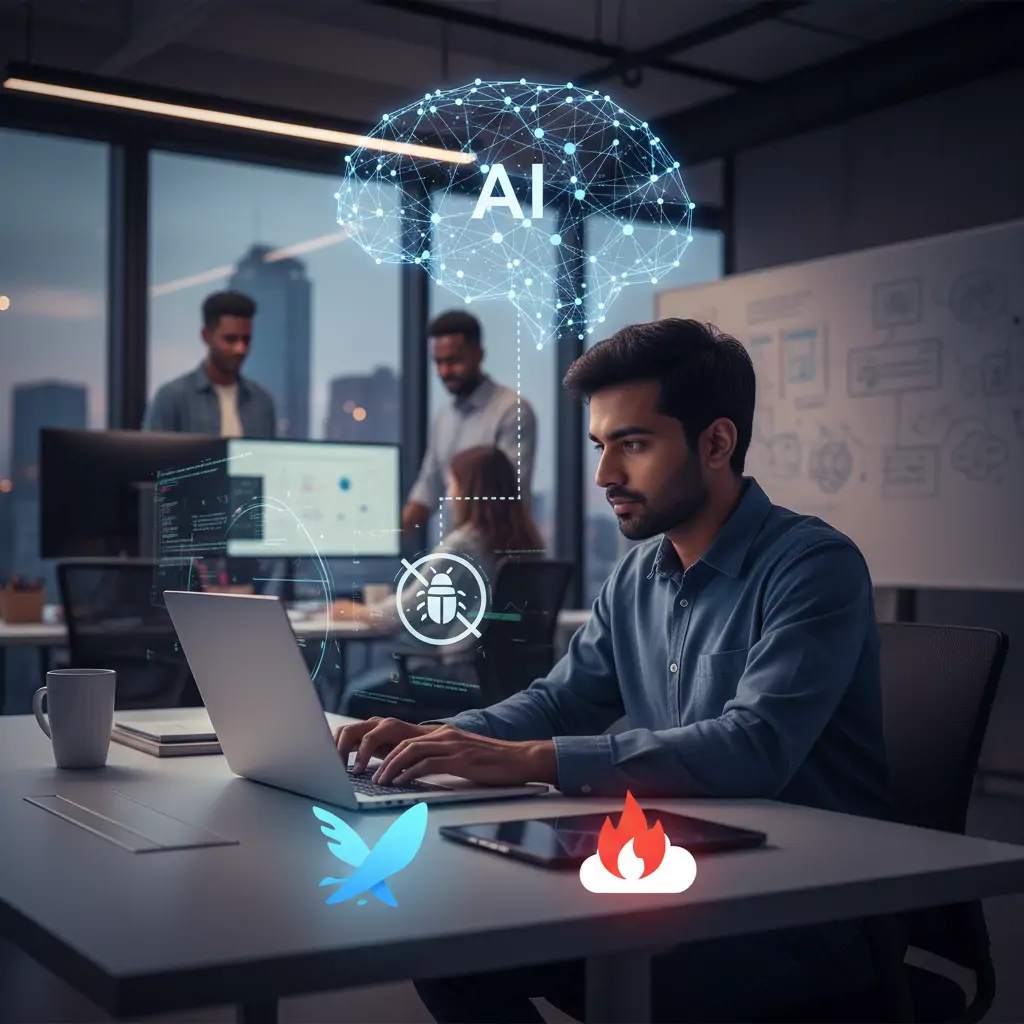
Introduction: Why This Matters Now
In 2025, the software development landscape is undergoing a seismic shift, driven by the integration of AI-powered microservices. A recent Gartner report highlights that over 70% of large enterprises are now exploring AI microservices to streamline their development processes, with expectations for this figure to reach 90% by 2026. This trend is poised to revolutionize the industry by enhancing scalability, efficiency, and adaptability.
The implications for developers, businesses, and investors are profound, offering a glimpse into a future where AI microservices become the backbone of software innovation. Estimated read time: 7 minutes.
The Current State: What's Happening Right Now
In January 2025, Google Cloud announced the launch of its AI microservices platform, aiming to reduce deployment time by 40%. Amazon Web Services quickly followed suit with similar offerings in March 2025. The market size for AI microservices is projected to reach $12 billion by the end of 2025, marking a significant increase from $3 billion in 2023 (Forrester Research).
Traditional software development approaches are struggling to keep pace with the demand for rapid innovation and scalability, making AI microservices an attractive alternative for companies like IBM, Microsoft, and Oracle.
Key Drivers: What's Fueling This Trend
Driver 1: Technical Advancements
The advent of machine learning algorithms capable of automating complex tasks has been crucial. For example, OpenAI's GPT-4, launched in 2024, demonstrated unprecedented efficiency in code generation, reducing development times by 30%.
Driver 2: Economic Pressures
With rising operational costs, businesses are compelled to seek more cost-effective solutions. AI microservices present a viable option, with companies reporting an average reduction in costs by 25% over traditional software architecture (McKinsey & Company, 2024).
Driver 3: Demand for Personalization
Consumers increasingly expect personalized experiences, pushing companies to adopt flexible microservices that can be tailored rapidly to meet specific user needs.
Real-World Impact & Case Studies
Case Study 1: Spotify
- Implemented AI microservices for personalized playlists.
- Increased user engagement by 15% within six months.
- Key lesson: Microservices enhance agility in feature deployment.
Case Study 2: Netflix
- Adopted AI-based content recommendation services.
- Achieved a 20% reduction in server costs while improving streaming quality.
- Key lesson: Cost savings and performance gains are achievable simultaneously.
Industry Implications
For Developers
- Mastering AI integration tools (e.g., TensorFlow, PyTorch)
- High demand for microservices architects
For Businesses
- Strategic investment in AI capabilities
- First-mover advantage in tech innovation
For Investors
- Opportunities in AI startups focusing on microservices
- Assess risks in rapidly shifting tech landscapes
Challenges & Criticisms
Despite the hype, AI microservices face skepticism. Concerns about security vulnerabilities and the need for extensive infrastructure changes are significant hurdles. A 2025 survey by TechCrunch found that 45% of CTOs cited integration challenges as their primary concern.
Future Outlook: What's Next
Short-term projections suggest widespread adoption of AI microservices in financial and healthcare sectors by 2026. Long-term, these services are expected to redefine software-as-a-service (SaaS) models. Key milestones include the anticipated launch of AI-driven development platforms by mid-2026.
Frequently Asked Questions
- What are AI-powered microservices? They are modular services enhanced by AI capabilities designed to optimize software development.
- How do they differ from traditional microservices? AI microservices automate and enhance functionalities through AI integration.
- What are the main barriers to adoption? Integration complexity and security concerns are significant barriers.
- Are AI microservices cost-effective? Yes, they typically reduce costs by streamlining processes.
Conclusion: Key Takeaways
- AI microservices are pivotal in transforming software development.
- Technical and economic factors are driving this trend.
- Businesses must strategically adapt to leverage these technologies.
- Continuous learning and investment in AI skills are essential for developers.
For more insights, explore resources on AI integration strategies and future tech predictions.