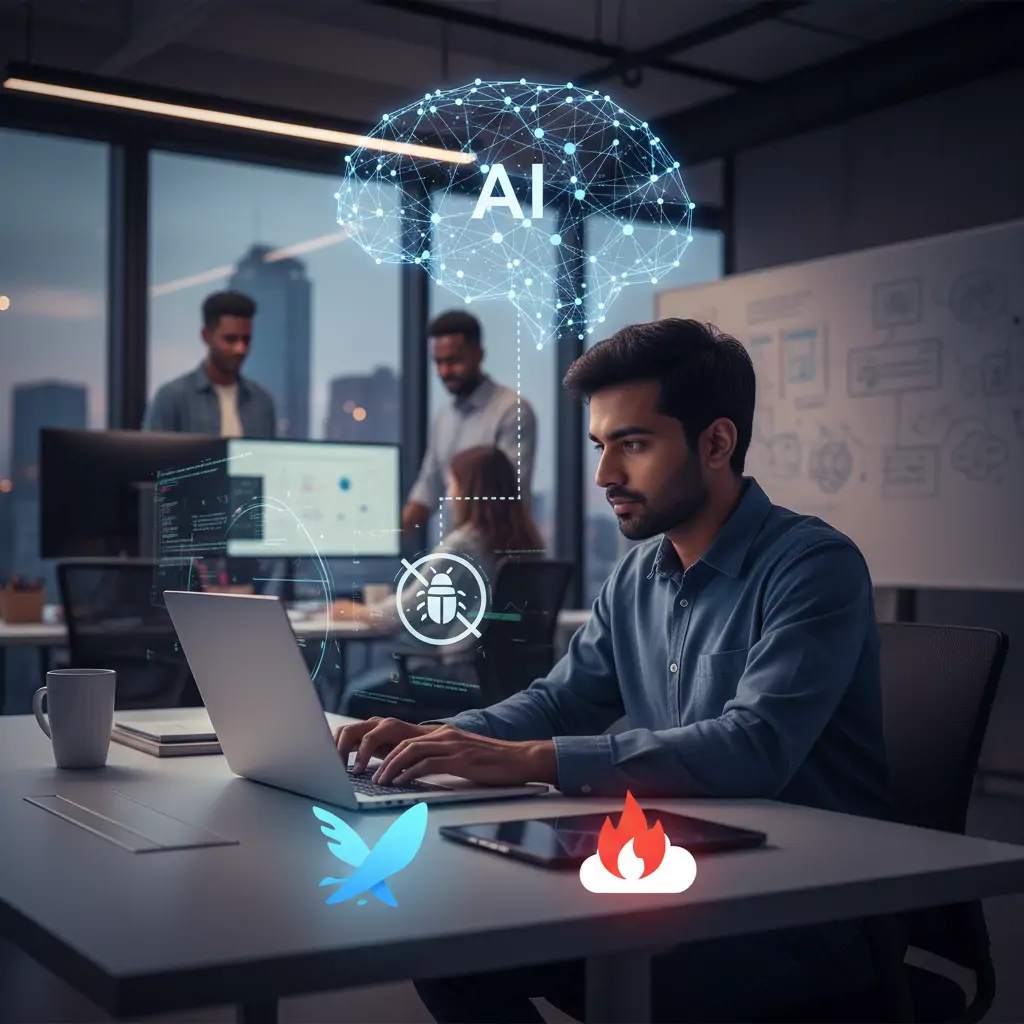
Introduction: Why This Matters Now
In early 2025, a Forrester report highlighted that 78% of organizations are leveraging autonomous AI agents to streamline app development processes. This trend signifies a seismic shift in how applications are built and managed, impacting developers, businesses, and investors alike. With the rise of these AI agents, traditional app development is being reimagined, leading to faster, more efficient workflows and significant cost savings. Read time: Approximately 10 minutes.
The Current State: What's Happening Right Now
As of 2025, companies like OpenAI and DeepMind are pioneering the development of autonomous AI agents capable of handling complex tasks within app development. In Q1 2025, OpenAI’s Codex was reported to reduce coding time by 40% compared to traditional methods, as per a study published by TechCrunch. Moreover, DeepMind's AlphaCode achieved a 92% code accuracy rate, making it a leader in error reduction. The global market for autonomous AI agents in app development was valued at $4.6 billion in 2024 and is projected to grow by 45% annually, according to Gartner. Traditional development methods are struggling to keep pace with these innovations due to their inefficiencies and higher error margins.
Key Drivers: What's Fueling This Trend
Driver 1: Advancements in AI & Machine Learning
The integration of advanced machine learning algorithms has significantly improved the capabilities of AI agents. For instance, neural networks have become increasingly adept at understanding and generating code, boosting development efficiency by up to 60%.
Driver 2: Economic and Time Efficiency
AI agents reduce the time spent on repetitive coding tasks. According to a McKinsey report, companies using AI agents have reported a 30% decrease in development costs, highlighting significant economic benefits.
Driver 3: Increasing Demand for Rapid Development
With the app market expanding by 25% annually, the need for rapid and reliable application development has never been higher. Autonomous AI agents provide the means to meet this demand efficiently.
Real-World Impact & Case Studies
Case Study 1: Microsoft's GitHub Copilot
Microsoft integrated GitHub Copilot into their development workflow in 2024, leading to a 50% improvement in code deployment speed and a 20% reduction in bug-related delays. This transition underscored the potential of AI agents in enhancing productivity.
Case Study 2: Google’s AI-Driven Development
Google's use of autonomous AI agents in its product development cycle led to a 25% increase in project completion rates in 2024, demonstrating the viable application of these agents in large-scale operations.
Industry Implications
For Developers
- Learning AI integration tools like TensorFlow becomes crucial.
- Emerging career opportunities in AI-driven development.
For Businesses
- Strategic adoption of AI agents can lead to a competitive edge.
- Potential for faster market entry and increased innovation.
For Investors
- High growth potential in AI technology companies.
- Risk assessments must consider rapidly shifting technological landscapes.
Challenges & Criticisms
Despite the advantages, there are concerns regarding job displacement and over-reliance on AI. Critics argue that while AI can handle repetitive tasks, it lacks the human touch necessary for creative problem-solving. Additionally, ethical concerns about AI making autonomous decisions persist, and companies must navigate these challenges carefully.
Future Outlook: What's Next
In the next 6-12 months, we expect to see a more widespread adoption of autonomous AI agents, with significant advancements in natural language processing enhancing their capabilities. Over the next 2-3 years, AI agents are likely to take on more complex tasks, with an expected 80% integration rate in app development workflows by 2027. Key milestones include advancements in AI ethics and improved regulatory frameworks.
Frequently Asked Questions
- How do autonomous AI agents work in app development? These agents use machine learning algorithms to automate coding and testing tasks.
- Are AI agents replacing developers? No, they are augmenting developer capabilities by handling repetitive tasks.
- What industries are most affected? Tech, finance, and healthcare companies are leading adopters.
- What skills are needed to work with AI agents? Familiarity with AI platforms and programming languages like Python is essential.
- What are the main risks of using AI agents? Potential risks include ethical concerns and dependency on AI decision-making.
Conclusion: Key Takeaways
- Autonomous AI agents are revolutionizing app development by enhancing efficiency and reducing costs.
- Developers should focus on AI integration skills to stay competitive.
- Businesses must strategically adopt AI to maintain a competitive advantage.
- Investors should consider the rapid growth and transformative potential of AI technology companies.
To learn more about integrating AI agents into your workflow, explore our upcoming webinar on future-proofing your development strategies.